Learn how to store spices properly to keep them fresh, aromatic and flavorful.
Discover best ways to store spices and tips to extend shelf life and improve cooking.
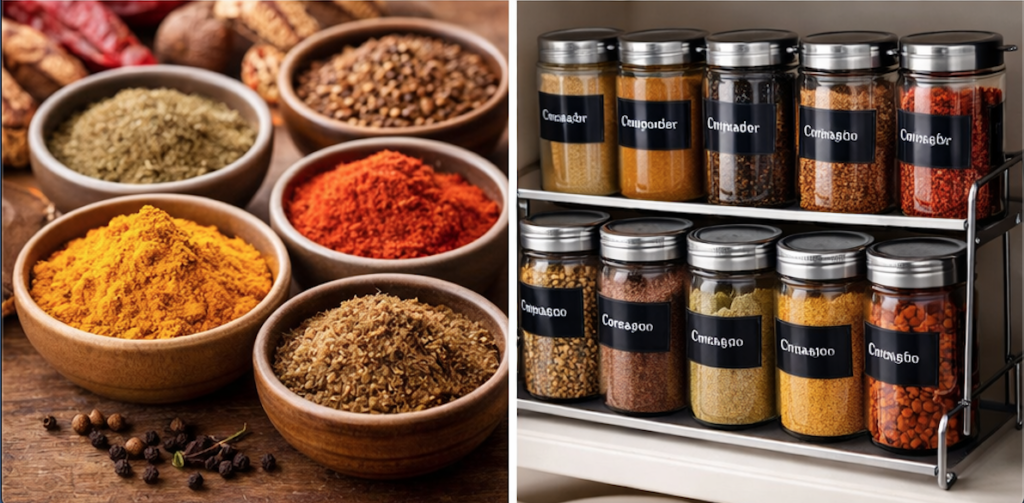
Spices are the heart of flavorful cooking. From turmeric and cumin to cinnamon and cardamom, spices add aroma, color, and depth to dishes. However, many people overlook one important factor — how to store spices . If spices are not stored correctly, they can quickly lose their flavor, aroma, and potency.
Therefore, understanding how spices should be stored can help maintain their freshness and extend their shelf life. In this guide, we will explore the best ways on to store spices, common mistakes to avoid, and practical tips to keep your spices flavorful for longer.
Why Proper Spice Storage Matters
Spices contain natural oils that give them their unique flavor and fragrance. However, these oils are sensitive to light, heat, air, and moisture. When spices are exposed to these elements, they gradually lose their strength and aroma.
As a result, poorly stored spices may taste dull or bland, even when added generously to recipes. On the other hand, properly stored spices retain their flavor for much longer and can significantly improve the taste of your cooking.
1. Store Spices in Airtight Containers
First and foremost, spices should always be stored in airtight containers. When spices are exposed to air, they begin to lose their essential oils, which weakens their flavor.
Glass jars with tight lids, stainless steel containers, or high-quality food-grade plastic containers are ideal for spice storage. In addition, airtight containers prevent moisture from entering, which can cause spices to clump or spoil.
Therefore, transferring spices from open packets into sealed containers is a simple but effective way to maintain their freshness.
2. Keep Spices Away from Heat
Heat is another major factor that can degrade spices quickly. For example, storing spices near a stove or oven may seem convenient, but the constant heat can reduce their flavor over time.
Instead, it is better to keep spices in a cool and stable environment, such as a kitchen cabinet or pantry. By storing spices away from heat sources, you help preserve their natural oils and aroma.
3. Protect Spices from Light
Exposure to direct sunlight or strong artificial light can also damage spices. Light breaks down the compounds responsible for flavor and color, which leads to faded and less potent spices.
For this reason, spices should ideally be stored in dark cabinets or opaque containers. If you prefer using glass jars, storing them inside a closed cupboard can help protect them from light.
As a result, the spices will retain their vibrant color and strong aroma for longer periods.
4. Avoid Moisture Exposure
Moisture can quickly spoil spices by causing clumping or mold growth. This often happens when steam from cooking enters spice containers.
To prevent this problem, avoid sprinkling spices directly over steaming pots. Instead, measure the required amount using a spoon and then add it to the dish.
Furthermore, always ensure the container lid is tightly closed after use. This simple habit helps keep moisture out and preserves the quality of your spices.
5. Store Whole Spices When Possible
Another useful tip is to store whole spices rather than ground spices whenever possible. Whole spices, such as cinnamon sticks, cardamom pods, or cumin seeds, tend to retain their flavor much longer.
In contrast, ground spices lose their aroma faster because their surface area is larger and more exposed to air.
Therefore, buying whole spices and grinding them when needed can significantly improve the freshness and flavor of your cooking.
6. Label and Organize Your Spices
Organizing spices properly can make cooking easier and more efficient. Labeling containers with the spice name and purchase date helps you track freshness.
In addition, arranging spices alphabetically or by frequency of use can save time when preparing meals.
Moreover, keeping spices organized reduces the chance of forgetting older spices that should be replaced.
How Long Do Spices Stay Fresh?
Although spices do not usually spoil in the traditional sense, they gradually lose their potency over time.
Here is a general guideline:
- Whole spices: up to 3–4 years
- Ground spices: about 1–2 years
- Dried herbs: about 1–3 years
However, proper storage can help spices maintain their flavor for the maximum possible time.
How to Tell If Spices Have Lost Their Flavor
Sometimes it can be difficult to determine whether spices are still fresh. Fortunately, there is a simple way to check.
Rub a small amount of the spice between your fingers and smell it. If the aroma is weak or barely noticeable, the spice may have lost its potency.
In such cases, replacing the spice will ensure your dishes remain flavorful.
Common Spice Storage Mistakes
Even experienced cooks sometimes make mistakes when storing spices. For example:
- Keeping spices near the stove
- Leaving spice containers open
- Storing spices in humid environments
- Buying large quantities that take years to finish
By avoiding these mistakes, you can keep your spices fresh and aromatic for much longer.
Final Thoughts
Proper spice storage plays a crucial role in maintaining the flavor and aroma of your ingredients. By keeping spices in airtight containers, protecting them from heat and light, and avoiding moisture exposure, you can extend their shelf life and improve the quality of your cooking.
In addition, choosing whole spices and organizing them carefully can make your kitchen more efficient and enjoyable to use. With these simple practices, your spices will stay fresh, fragrant, and ready to enhance every dish you prepare.