
How to Cook Extra-Long Basmati So the Grains Stay Separate
Rinse, soak, ratio, flame, rest. The method that keeps aged extra-long grain long, fragrant and apart.
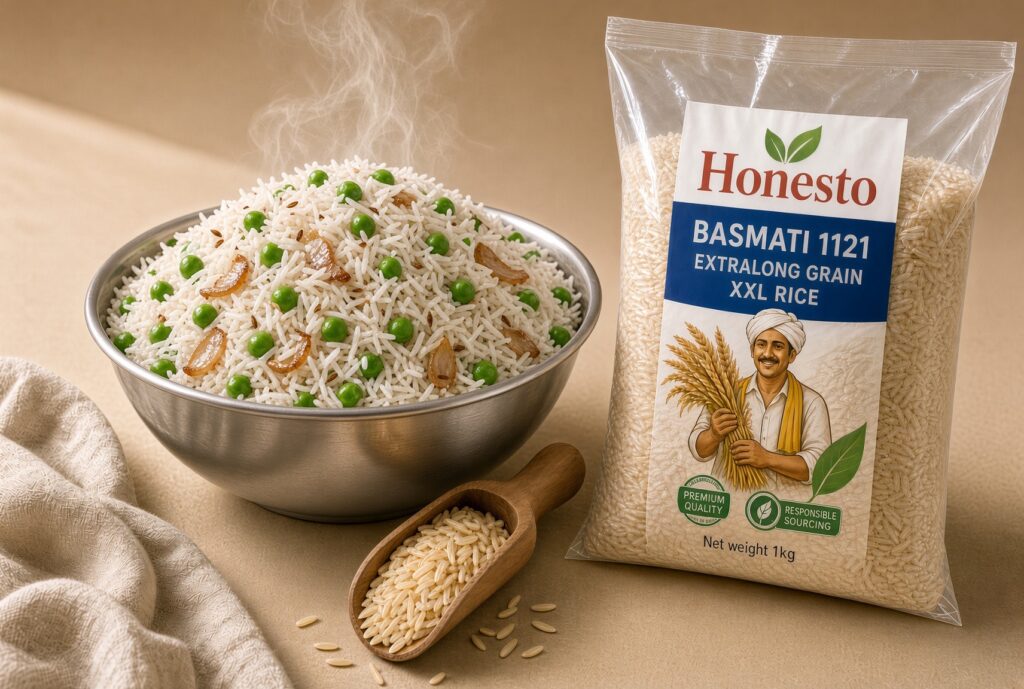
Separate grains are a method result, not a lucky pot. Rinse, soak, then leave the lid alone.
Extra-long basmati should land on the plate in separate strands, each one longer than it went into the pot, with a nutty smell and no paste at the bottom. When it clumps, the rice is rarely the problem. The rinse was short, the soak was skipped, the water was guessed, or the spoon went in too early.
This is the absorption method we use with Puresto extra-long basmati, 1kg. It is aged long-grain rice, packed with no additives or color. The grain can only elongate if you give it water before the boil, then stop adding water once the lid is on.
The short version
- Rinse 4 to 5 times, gently, until the water is mostly clear.
- Soak 20 to 30 minutes. Drain fully.
- 1 cup rice to 1.5 cups fresh water. Salt only if you like.
- Boil, then the lowest flame, lid on, 10 to 12 minutes. Do not stir.
- Rest 8 to 10 minutes off the heat. Fluff with a fork.
Why extra-long grain needs a different hand
Extra-long basmati is a slender grain. Aged rice has lost a little moisture in storage, which is why it lengthens more and sticks less than new-crop rice. That only shows up if the grain drinks water evenly before it cooks.
Surface starch is the other half. It is what clouds the first rinse. Leave it on and the grains glue together even if the variety is right. Wash it off and the same cup of rice cooks in distinct strands.
In a UAE kitchen the extra variable is heat. Rice left soaking on the counter at midday can start to smell sour. Twenty to thirty minutes is the window. Not overnight.
Step 1: Rinse until the water is mostly clear
Put the rice in a wide bowl, not a narrow jug. Cover with cold water. Swirl with your fingers. Do not rub the grains against the bowl. Extra-long tips snap if you scrub.
Drain. Repeat. The first water is milky. The third is cloudy. By the fourth or fifth rinse it should look faintly cloudy, not white. Clear-as-glass is unnecessary, and over-washing dulls the aroma.
Stop when you can see the grains through the water. That is enough starch gone for separate rice, and enough left for the natural smell.
Step 2: Soak, then drain like you mean it
Cover the rinsed rice with fresh cold water. Leave it 20 to 30 minutes. Aged extra-long grain is happy at 25 to 30. New or very fresh rice can stop at 20, or the tips burst.
Drain in a sieve. Shake it. Leave it two minutes. Wet rice plus the full water measure is why pots overflow and grains split. The soak water is discarded. Cooking water is a fresh measure.
Do not soak in the fridge unless you are delayed. Cold grain needs a few extra minutes to come back to room temperature, or the outside cooks before the core.
Step 3: The water ratio that keeps grains apart
After soaking and draining, measure the rice again if you can. Soaked rice swells, so measure before the soak, or use the dry-cup amount you started with.
| Method | Rice | Water after soak and drain | Time |
|---|---|---|---|
| Stovetop, heavy pot | 1 cup | 1.5 cups | 10–12 min simmer, then 8–10 min rest |
| Tight lid or small batch | 1 cup | 1.25 cups | Same, watch the last 2 minutes |
| Older rice or a hot open flame | 1 cup | 1.75 cups | Same |
| Rice cooker | 1 cup | 1.25–1.5 cups | Auto, then 10 min on warm |
| Open boil for biryani grain | 1 cup | Plenty of salted water | 6–8 min, then drain and dum |
A standard cup here is the same cup for rice and water. Do not mix a teacup of rice with a mug of water.
Salt is optional for plain rice: about 1/4 teaspoon per cup. For jeera rice, add 1 teaspoon cumin seed to a teaspoon of oil or ghee before the rice and water go in. Cold-pressed groundnut oil is enough. You do not need a pool of fat to keep basmati separate. Fat flavors. Rinsing separates.
Step 4: Boil once, then do not touch it
Use a heavy pot with a lid that sits flat. Thin pans scorch the bottom before the top is done.
- Add drained rice, measured water, and salt.
- Bring to a proper boil on medium-high, uncovered.
- When the surface is bubbling across, stir once to nonstick the bottom. This is the only stir.
- Drop the flame to the lowest setting. Lid on.
- Cook 10 to 12 minutes. If your burner cannot go truly low, use a simmer plate or shift the pot half off the flame.
- The water should be absorbed and the surface dotted with small steam holes. Tilt the pot. No free water.
If you smell toast before the time is up, the flame is too high. Pull the pot off for a minute, then return it to a lower flame. Do not add a splash of water unless the top is still chalk-dry. A splash steams the bottom into porridge.
Step 5: Rest, then fluff from the side
Turn the heat off. Leave the lid on for 8 to 10 minutes. This is when the grain finishes from the inside and the moisture evens out. Skip it and the top looks separate while the bottom weeps.
Take the lid off. Slide a fork in from the side and lift. Do not press down. A slotted spoon works if you do not own a fork wide enough. The rice should fall in strands.
If you are holding it for a family that eats in shifts, leave the lid ajar, not sealed. Sealed rice in a hot UAE kitchen keeps sweating and softens.
Open-pot method, if you want biryani grain
For layered biryani, many cooks boil extra-long basmati like pasta. Rinse and soak the same way. Boil in a large pot of salted water for 6 to 8 minutes, until a grain bends and still has a thin white line at the center. Drain at once. Spread it so it stops cooking. Finish under a tight lid with the gravy, on very low heat, for the dump.
Everyday dale-rice does not need this. The absorption method above is the one to learn first. If you want a full pot, use the same rice in our vegetable pulao.
Rice cooker and pressure cooker
Rice cooker: rinse, soak, drain, then 1 to 1.25–1.5 water. Do not use the porridge setting. Leave it on warm 10 minutes before you open the lid.
Pressure cooker: only if that is the pot you have. Soak and drain. Use 1 cup rice to 1.25 cups water. One whistle on low, then 10 minutes of natural release. A high flame and two whistles is how extra-long grain turns to mush. An open pot is kinder to this rice.
Mistakes that make basmati clump
- One rinse. The starch is still on the grain.
- No soak. The outside splits, the core stays firm, and the grain looks short.
- Soak water reused as cooking water. You just poured the starch back in.
- Too much water. Separate grain needs absorption, not a stew.
- Stirring after the lid is on. You break the tips and release more starch.
- No rest. Steam has not finished the center.
- Broken rice in the pack. Tips and dust cook faster and glue the rest. Our 1kg extra-long pack is selected for long slender grain; still, pick out any dust at the bottom of an older open pack.
Fix a pot that already stuck
If it is only slightly sticky, spread it on a wide plate for three minutes, then fork it. The surface moisture leaves and the grains separate.
If the bottom is a crust, lift the loose rice off and serve that. Do not scrape the crust back in. A thin crust is toasted rice, useful another day. A wet crust means the water was high and the flame was too.
Do not rinse cooked rice to “nonstick” it. You wash off the aroma that aging was meant to keep.
How much to cook, and how to keep the open pack
One cup of dry extra-long basmati feeds two people with dal, or three if it is a side. A 1kg pack is about 5 cups dry, enough for a week of family dinners if you cook a pot every other day.
After opening, fold the pack or move the rice to a dry jar with a tight lid. UAE humidity and an open bag are how grains pick up a stale smell and how weevils start. Keep it in a cupboard, not next to the stove. Washed rice should be cooked the same day. Do not store soaked rice on the counter.
Cooked rice, cooled quickly and boxed, keeps in the fridge up to a day. Reheat with a sprinkle of water, covered, so it steams rather than fries dry.
What to put next to it
Plain separate basmati is the plate, not the dish. It wants a dal with a short tadka: yellow moong on a weeknight, toor when you have a little longer. Jeera rice is the same method with cumin in the pot. Pulao is the same rice, fried onion, and a closed lid.
For a lighter Gulf-style bowl, pair it with lentil soup rather than a heavy gravy. The grain stays the point either way.
Cook this with the 1kg pack. Puresto extra-long basmati is aged, additive-free, and packed for biryani, pulao and everyday rice. Free shipping on orders above AED 100.
Buy extra-long basmati 1kg · Order on WhatsApp
Questions we get asked
How long should I soak extra-long basmati?
Twenty to thirty minutes after rinsing, then drain it fully. That is enough for the grain to lengthen. An overnight soak in a warm kitchen splits the tips.
What is the water ratio for soaked extra-long basmati?
1 cup rice to 1.5 cups water on the stove top. Use 1.25 cups if the lid is very tight, and up to 1.75 if the rice is older or the flame runs hot.
Why does my basmati stick together?
Leftover surface starch, too much water, stirring, or no rest. Rinse until the water is mostly clear, do not stir after the lid goes on, and rest 8 to 10 minutes before fluffing.
Can I cook it in a rice cooker?
Yes. Rinse, soak, drain, then about 1.25 to 1.5 cups water per cup of rice. Leave it on warm for 10 minutes before you open the lid.
Is extra-long basmati gluten-free?
Rice is naturally gluten-free. The pack is plain grain, with no additives. If you need a gluten-free meal, keep the spoon and the pot away from wheat flour.
A shorter overview sits here if you want the outline only: how to cook perfect basmati rice. For the grain that stays apart, use the ratios on this page and the 1kg extra-long pack.